

Why School Emergency Communication Matters More Than Ever
School safety has evolved significantly over the last decade. While schools continue to focus on prevention and preparedness, they must also be ready to respond quickly when emergencies occur. From severe weather and medical incidents to security threats and campus disruptions, school leaders face increasing pressure to ensure students and staff remain safe during unexpected situations.
In nearly every emergency, communication plays a critical role. The ability to share accurate information quickly can help reduce confusion, improve decision-making, and support faster response efforts. Unfortunately, many traditional communication methods were not designed to handle the speed and complexity of modern school emergencies.
Intercom systems, radios, phone trees, and manual communication processes still have value, but they often operate independently. These disconnected approaches can create delays when schools need information to move quickly. In an emergency, even a few minutes can make a significant difference.
A modern school emergency communication system helps schools overcome these challenges by providing real-time communication tools that connect staff, administrators, first responders, students, and families. Instead of relying on multiple systems and manual processes, schools can coordinate response efforts through a unified communication platform.
As school safety expectations continue to evolve, districts are increasingly adopting technology that supports faster communication, improved situational awareness, and stronger coordination. These systems are becoming an essential part of comprehensive school safety planning.
What Is a School Emergency Communication System?
A school emergency communication system is a technology platform that enables schools to communicate rapidly during emergencies and critical incidents. These systems help schools send alerts, coordinate response activities, provide updates, and manage communication throughout an event.
Unlike older emergency notification systems that primarily focused on broadcasting messages, today’s solutions support a much broader range of safety and operational needs. They provide schools with tools that help initiate alerts, share information, track incidents, and maintain visibility throughout a response.
Modern platforms often include mobile applications, wearable panic buttons, mass notification capabilities, emergency workflows, location awareness, reporting tools, and integration with other school systems. Together, these capabilities create a more connected approach to emergency management.
The goal is not simply to notify people that an incident has occurred. The goal is to help schools communicate effectively before, during, and after an emergency.
As districts continue investing in safety initiatives, the school emergency communication system has become a foundational component of a comprehensive safety strategy.
How Real-Time Emergency Communication Works
The effectiveness of any emergency response depends on how quickly information moves between the people involved.
Imagine a staff member identifies a medical emergency in a hallway. Instead of locating a phone or radio, they activate an alert using a wearable device or mobile application. Within seconds, designated personnel receive the notification.
Administrators gain visibility into the situation. Staff members receive instructions based on established emergency protocols. Response teams can immediately begin coordinating their actions.
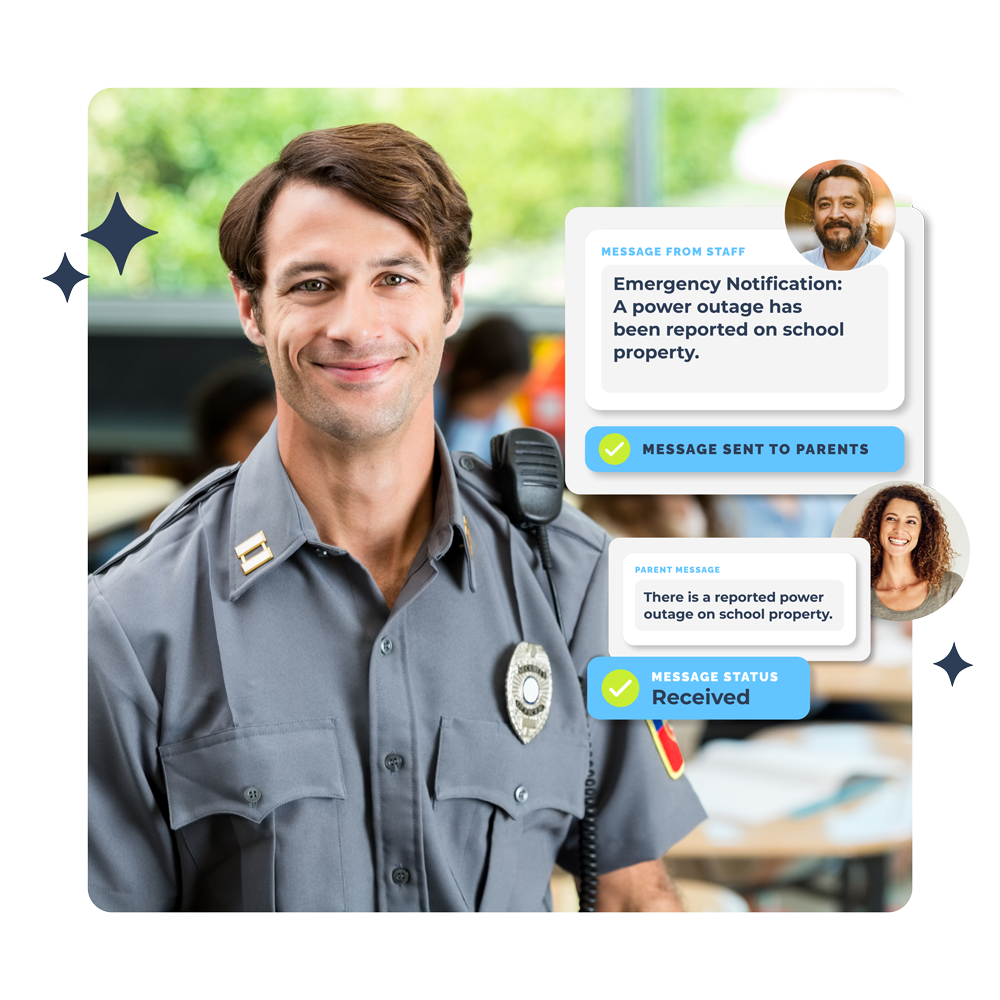
If necessary, communication can extend beyond the building. District leaders can receive updates. Emergency responders can gain situational awareness before arriving on campus. Families can receive approved messages that provide accurate information while reducing speculation and confusion.
As the incident evolves, authorized personnel can continue sharing updates through the same platform. This creates a centralized source of information that helps ensure everyone works from the same understanding of the situation.
The result is a faster, more coordinated response that reduces communication gaps and improves overall emergency management.
Benefits of Modern School Emergency Communication Systems
Faster Response Times
One of the most significant advantages of a school emergency communication system is the ability to accelerate response times.
When staff can request assistance immediately, responders gain valuable time to assess and address the situation. Removing communication barriers helps ensure that information reaches the appropriate people without unnecessary delays.
Many emergencies require immediate action. A streamlined communication process helps schools respond more effectively when every second matters.
Improved Situational Awareness
Emergency response leaders need accurate information to make informed decisions.
Modern communication platforms provide real-time visibility into developing incidents. Administrators can understand where an event is occurring, monitor ongoing activity, and determine which resources may be needed.
This level of awareness supports better decision-making and helps schools adapt as situations change.
Greater Staff Confidence
Technology alone does not improve safety. People play the most important role in emergency response.
When staff members know they have access to reliable communication tools, they often feel more confident in their ability to respond appropriately during emergencies. Clear communication pathways help reduce uncertainty and encourage faster action.
Confidence can improve preparedness, increase participation in drills, and strengthen overall safety culture.
Better Parent Communication
Parents expect schools to communicate quickly and accurately during emergencies.
A school emergency communication system helps administrators share timely updates through multiple communication channels. Families receive consistent information that helps reduce confusion and misinformation.
Effective parent communication can strengthen trust while helping schools maintain transparency throughout an incident.
Stronger Coordination with First Responders
Many schools are working to improve collaboration with local law enforcement, fire departments, and emergency medical services.
Real-time communication platforms can help support these partnerships by improving information sharing before and during emergency events. Responders can receive valuable situational information that supports faster and more effective decision-making.
When schools and responders work from the same information, response efforts become more coordinated and efficient.
Common Challenges with Traditional Emergency Communication
Despite advances in school safety technology, many districts still rely on communication methods that were developed decades ago.
Intercom systems provide limited flexibility and often support only one-way communication. Radio systems can become congested during emergencies. Phone trees require manual effort and can delay information sharing. Email is often too slow for time-sensitive situations.
These challenges can create communication gaps that impact emergency response efforts.
Traditional communication methods also make it difficult to track message delivery, monitor response activities, and maintain accountability throughout an incident.
As schools evaluate their preparedness strategies, many discover that fragmented communication systems limit their ability to respond effectively.
A modern school emergency communication system addresses these challenges by creating a centralized platform that supports communication, coordination, and documentation throughout the response process.
Key Features Schools Should Look For
Not all emergency communication solutions offer the same capabilities. School leaders should evaluate platforms carefully to ensure they align with district safety goals.
Ease of use should be a top priority. During an emergency, staff members need tools that are simple and intuitive.
Real-time alerting capabilities are equally important. The ability to communicate instantly can significantly impact response effectiveness.
Many schools are also prioritizing wearable panic button technology. These solutions provide staff with discreet access to emergency assistance and support faster incident reporting.
Mobile accessibility allows staff to communicate from anywhere on campus. This flexibility is especially important in large schools and multi-building districts.
Reporting and audit trails help administrators review incidents, document actions, and identify opportunities for improvement.
Integration capabilities should also be considered. The most effective solutions work alongside existing safety and operational systems rather than functioning as standalone tools.
Building a Connected School Safety Ecosystem
School safety is most effective when systems work together.
Many districts have invested in multiple technologies to support safety, security, and daily operations. These may include visitor management systems, attendance tracking solutions, emergency response platforms, reunification tools, and communication applications.
When these systems operate independently, information often remains siloed. Staff members may need to access multiple platforms during an emergency, creating unnecessary complexity.
A connected school safety ecosystem helps eliminate these challenges.
For example, visitor management systems can provide visibility into who is on campus during an emergency. Attendance systems can help identify student locations and accountability information. Reunification solutions can streamline family reunification efforts after a critical incident.
When these technologies work together, schools gain a more complete view of the situation and can respond more effectively.
This integrated approach supports both emergency preparedness and daily operations. It helps schools build a stronger safety foundation while improving efficiency across multiple processes.
Best Practices for Implementing an Emergency Communication System
Technology alone cannot guarantee preparedness. Successful implementation requires planning, training, and ongoing evaluation.
Schools should begin by conducting a safety assessment to identify communication gaps and response challenges. Understanding current processes helps districts determine where improvements are needed.
Staff training should remain a priority throughout implementation. Employees need to understand how the system works, when to use it, and how it fits within existing emergency procedures.
Regular drills provide valuable opportunities to reinforce training and evaluate response processes. Schools should use drills to identify strengths, uncover gaps, and improve communication workflows.
District leaders should also review incident data and system reports regularly. Continuous evaluation helps ensure the platform continues supporting evolving safety goals.
The most successful implementations focus on people, processes, and technology working together.
The Future of School Emergency Communication
School safety technology continues to evolve.
Emerging solutions are introducing new capabilities that help schools improve awareness, communication, and response coordination. Artificial intelligence may eventually support faster information analysis, improved decision support, and more efficient emergency workflows.
Integration between schools and public safety agencies is also becoming more common. As communication systems become more connected, schools may gain additional opportunities to share information and improve coordination during emergencies.
Data and analytics will likely play an increasingly important role as districts seek to evaluate preparedness and strengthen response strategies.
At the same time, the core objective will remain unchanged. Schools need reliable communication tools that help people respond quickly and confidently during critical situations.
The future of school safety will continue to focus on empowering people with better information, stronger coordination, and faster access to assistance when it matters most.
No Two Emergencies Are The Same
Every emergency is different, but effective communication remains a constant requirement for successful response efforts.
A modern school emergency communication system helps schools reduce response times, improve situational awareness, strengthen collaboration, and communicate more effectively with staff, students, families, and first responders.
As districts continue investing in safety initiatives, communication technology is becoming a critical component of comprehensive preparedness planning. Schools that embrace connected communication strategies are better positioned to respond confidently when emergencies occur.
The most effective safety programs combine people, processes, and technology into a coordinated approach that supports preparedness every day, not just during emergencies.
When communication improves, response improves. And when response improves, schools create safer environments for everyone on campus.
Have you assessed your safety platform lately? Get an assessment today – Schedule Today!
Frequently Asked Questions
What is a school emergency communication system?
A school emergency communication system is a technology platform that helps schools communicate quickly during emergencies. These systems support alerts, notifications, response coordination, and stakeholder communication.
How does a school emergency communication system improve safety?
These systems reduce communication delays, improve situational awareness, support faster response times, and help schools coordinate more effectively during emergencies.
What features should schools look for in an emergency communication platform?
Schools should prioritize real-time alerts, mobile accessibility, wearable panic button options, reporting capabilities, integration support, and ease of use.
Why is real-time communication important during school emergencies?
Real-time communication helps ensure that staff, administrators, responders, and families receive accurate information quickly. Faster communication can improve coordination and support more effective emergency response efforts.